Jakub Mensik shares insights on beating idol Novak Djokovic, growing up in Czechia & Slam aspirations ahead of US Open
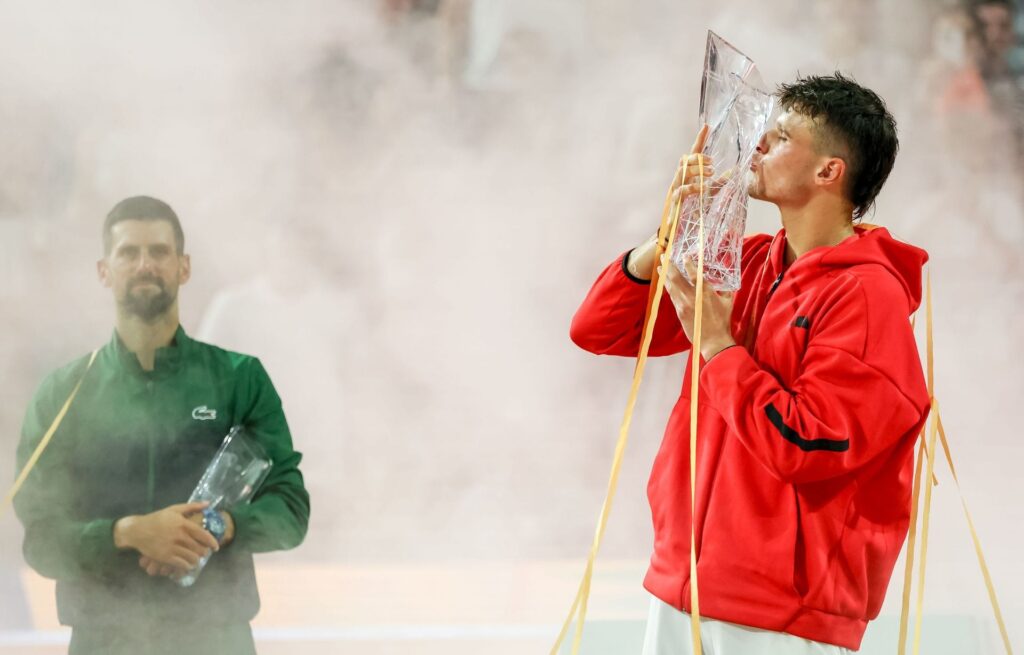

Jakub Mensik, who achieved a career-high ranking of No. 12 in the ATP rankings in March 2026, continues to establish himself as one of the most exciting young players on the ATP Tour. He reached his first Grand Slam semifinal at the 2026 French Open, defeating Joao Fonseca before losing to eventual champion Alexander Zverev.
Recently at the Canadian Open in Montreal, Mensik had a decent run, reaching the quarterfinals before losing to eventual champion Ben Shelton. He also made it to the fourth round of the Australian Open earlier this year, before following that up with a career-best win over then-World No. 2 Jannik Sinner in Doha.
Thanks for the submission!
The Czech has undergone significant evolution over the past 18 months, steadily establishing himself among the leading young players on the ATP Tour alongside the likes of Carlos Alcaraz, Jannik Sinner, and others. His rise has also included a memorable victory over 24-time Grand Slam champion Novak Djokovic, a player he has also had the opportunity to train with.
Following the Canadian Open, Mensik spoke exclusively to Sportskeeda about his rapid rise in the sport, his experiences training with Djokovic and eventually getting a win over the Serbian legend, while also opening up about his development, ambitions, and what he hopes to achieve in the future.
1. You have achieved a lot at just 20. Looking back at the last 18 months, what do you think has changed the most about Jakub Mensik — both as a player and as a person?
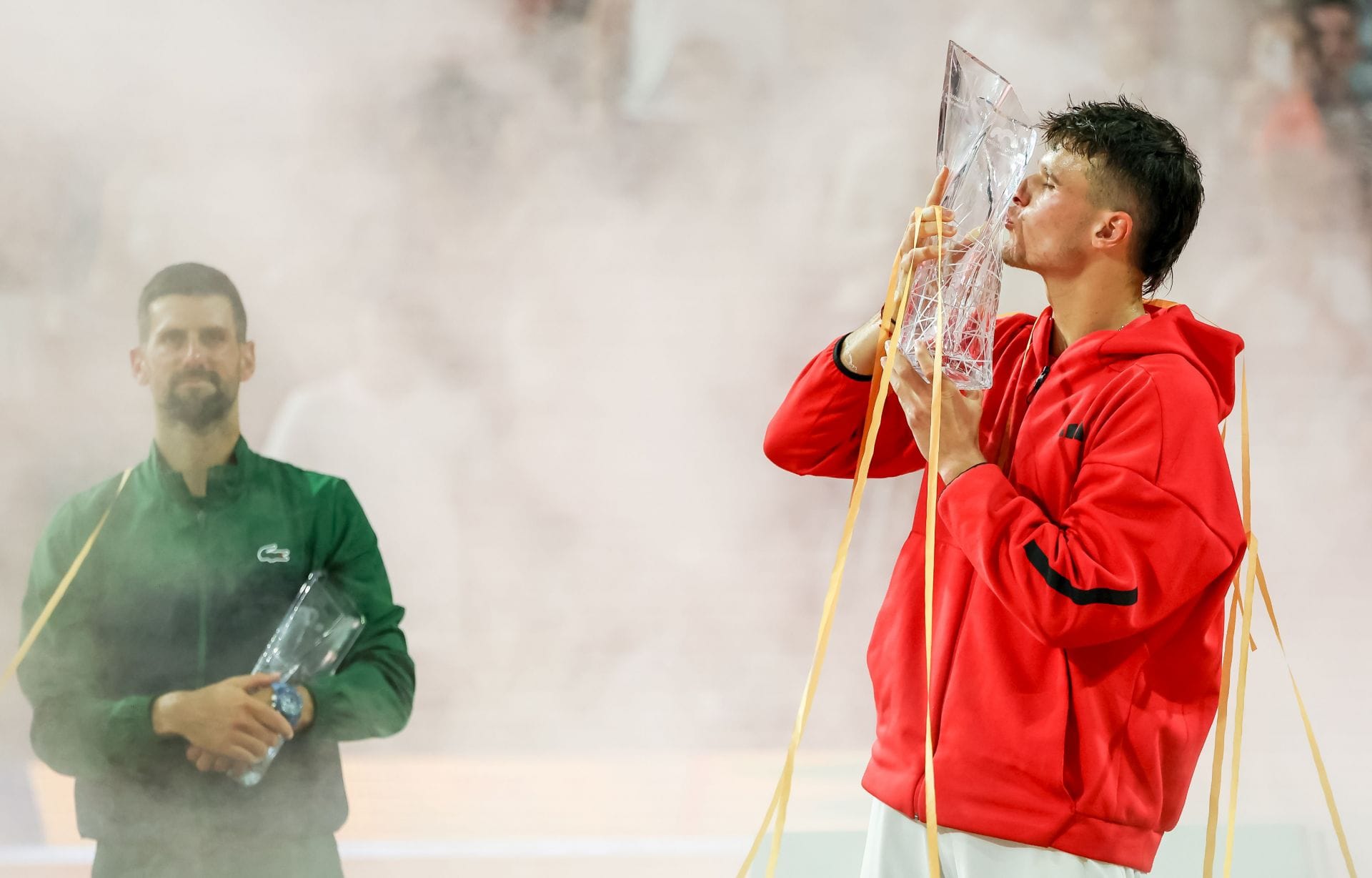
Jakub Mensik: I think the biggest change is that I understand myself much better now. 18 months ago, I was still trying to prove that I belonged at this level. Now I know I belong here, but that actually brings a different responsibility — I have to keep improving and not become satisfied.
As a player, I think I’m more complete and, especially, more mentally stable. I don’t panic as much when things aren’t going my way. As a person, I’ve probably become more independent. I’m still 20, so obviously I have a lot to learn, but travelling every week, playing in big stadiums and dealing with wins and losses teaches you very quickly.
The biggest lesson has been that one tournament doesn’t define you. You can win a Masters 1000 and feel like you’re on top of the world, and then lose in the first round the next week. You have to stay very grounded.
2. Growing up in Czechia and seeing the insane amount of tennis talent, especially on the WTA side, how did that motivate you? What do you think makes your country especially prone to rising stars in the game, perhaps more than any other nation in the world?
Jakub Mensik: In Czechia, tennis has a very strong tradition, and when you’re growing up, you constantly hear about players who achieved something before you. On the women’s side especially, we’ve had so many incredible players, and that’s inspiring because you can see that it’s possible.
I think one reason is the culture around tennis. We have a lot of good coaches and clubs, but also a mentality that you have to work hard and earn everything. Czech tennis has produced great players for many years, so there is a kind of expectation and belief that the next generation can do it too.
For me, seeing Czech players succeed made tennis feel like something that could become a real career, not just a dream. And when you see someone from a small country competing against the best in the world, you believe you can do the same.
(Czechia has a rich tennis tradition, especially on the women’s side, led by legends such as Martina Navratilova, who went on to win 18 Grand Slam singles titles, including a record nine Wimbledon titles. Her legacy continued through Petra Kvitova, Barbora Krejcikova and Marketa Vondrousova, while Wimbledon 2026 showcased the next generation as Linda Noskova defeated Karolina Muchova in an all-Czech final)
3. Djokovic went from being a player you looked up to, to inviting you to train with him, and eventually becoming someone you defeated in a Masters 1000 final. When you reflect on that journey, what does it mean to you, and what is the biggest lesson you’ve learned from him?
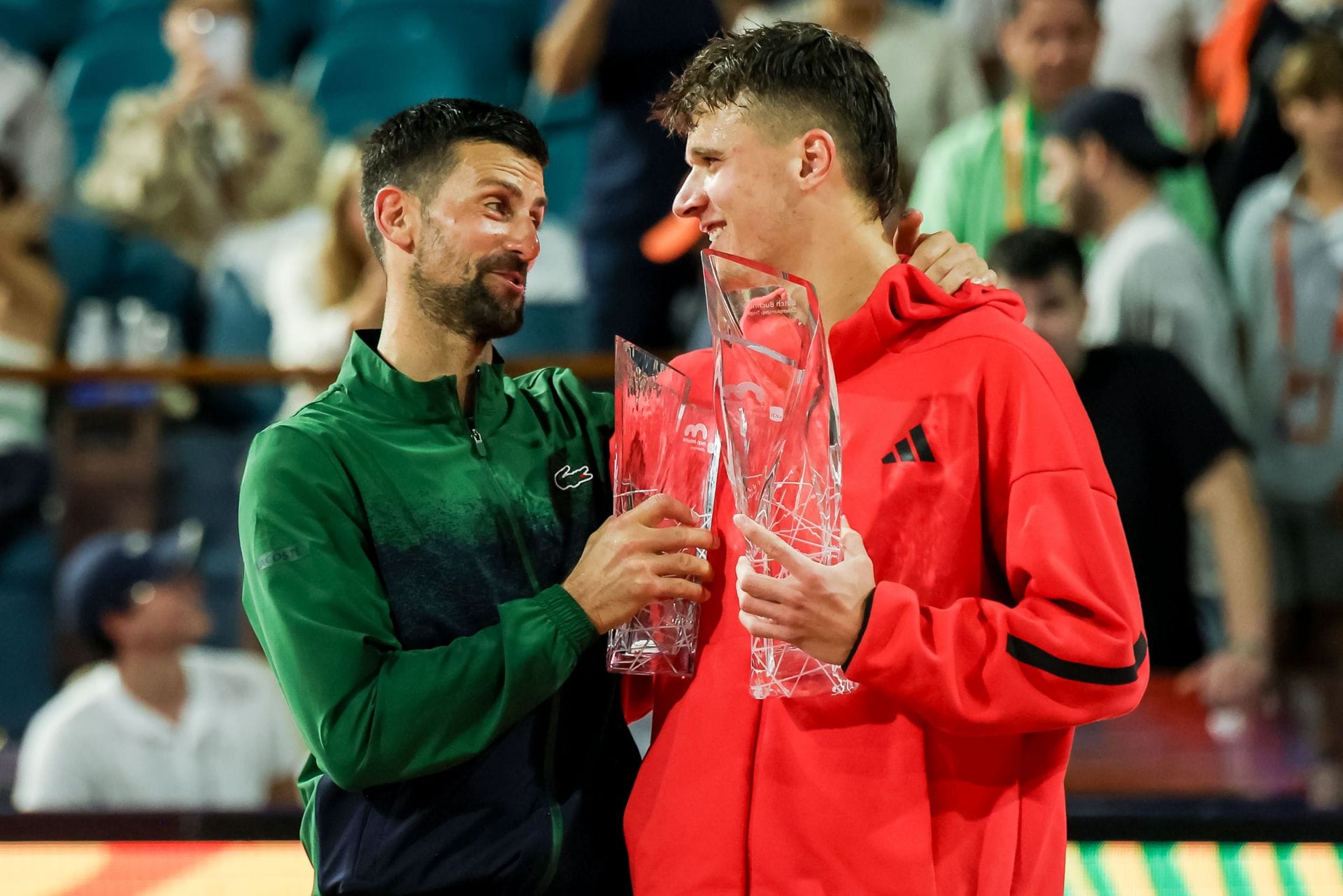
Jakub Mensik: It’s still a little crazy when I think about it. When Novak (Djokovic) first contacted me, I was just a young guy who had watched him for years. Suddenly I’m in Belgrade training with him and learning from him, and then later we’re playing each other in a Masters 1000 final.
Winning that final was obviously an incredible moment for me, but I don’t look at Novak differently because of that match. He is one of the greatest athletes ever, and what impressed me most was how seriously he approaches everything. Even after achieving almost everything possible, he still pays attention to small details.
That’s probably the biggest thing I learned from him: great champions don’t become great because they relax once they achieve something. They keep looking for ways to get better.
And playing against him also taught me that you have to believe you belong on the other side of the net. Respect your opponent, of course, but once the match starts, you can’t be thinking about their name or their achievements.
4. You’re part of a fascinating young generation alongside Carlos Alcaraz, Jannik Sinner, João Fonseca, Rafael Jódar and others. Does seeing your peers succeed push you to raise your own level? Among this generation, is there one player you particularly enjoy competing against and would happily face again and again — and is there someone you’d rather not see too often in your draw?
Jakub Mensik: Definitely. When you see young guys winning Grand Slams and becoming No. 1 in the world, it motivates you. You don’t want to be the guy watching from home thinking, „I could have been there.” You want to be part of that group.
I enjoy playing against players who bring a high level of intensity because it forces me to raise my own level. That’s what makes this generation exciting — everyone has a different style, and everyone is hungry.
As for someone I’d rather not see in my draw… I think I’ll keep that one private! I don’t want to give anyone extra confidence before a tournament. But honestly, that’s the reality of tennis now: there are very few easy matches.
5. You’ve already had some remarkable wins so early in your career, including victories over Novak Djokovic and Andy Murray. Looking back at the matches you’ve played so far, is there one win — or one match in particular — that feels especially special to you and that you think you’ll always remember?
Jakub Mensik: The Miami final against Novak will obviously always be very special because it was my first ATP title. To win a tournament like that at 20, and against someone who had been such an inspiration to me, is something I will never forget.
But I also remember the matches that were difficult rather than glamorous. The most recent one, Navone in Roland Garros, that was a battle to remember. Sometimes the biggest victories are the matches where you don’t play your best tennis but somehow find a way to win.
Those matches teach you something about yourself. A perfect match is great for your highlights reel, but a match where you’re suffering, fighting and still finding a way to win can change you as a player.
(Jakub Mensik overcame Mariano Navone in a five-set thriller at Roland Garros this year, which lasted four hours and 41 minutes. The Czech collapsed after the match due to the heatwave and was taken to the locker room in a wheelchair)
6. Your rise has happened very quickly. Do you ever have moments when you have to remind yourself to slow down and enjoy what you’ve achieved instead of immediately focusing on the next tournament or goal?
Jakub Mensik: Yes, definitely. Tennis is very good at making you forget what you’ve achieved because there’s always another tournament next week.
You win something big, and maybe you enjoy it for a day or two, and then you’re already thinking about your next opponent, your ranking or what you need to improve. I think it’s important to sometimes stop and actually appreciate the moment.
My team helps me with that. They remind me that I’m still very young and that I shouldn’t treat everything like an emergency. I want to have big goals, but I also want to enjoy the journey. Hopefully, I’ll have many years to chase the biggest things.
7. Congratulations on a strong run at the Canadian Open! Now, of course, your focus turns to the US Open. With some uncertainty around Carlos Alcaraz and Jannik Sinner’s participation, does that change your preparation or the way you approach the tournament in any way? And as you’re now being mentioned among the favourites, how do you handle that added expectation and pressure?
Jakub Mensik: I don’t think it changes my preparation. Whether a particular player is in the draw or not, I still have to prepare the same way and play the same tennis.
The US Open is one of the biggest tournaments in the world, so there is naturally pressure. But I actually like that. If people are talking about you as one of the favourites, it means you’ve done something right.
At the same time, I don’t want to get distracted by predictions. Tennis doesn’t care about rankings or what people say before the tournament. You still have to win your first match, and then your second. That’s where my focus is.
8. Fans mostly see you with a racket in your hand, but who is Jakub Mensik away from tennis?
Jakub Mensik: I’m actually pretty normal away from tennis. I like sports in general, football, Formula 1, listening to music, spending time with friends and family, and just having days where I don’t think about tennis.
I also enjoy watching other sports because it gives you a completely different perspective. When you’re a tennis player, you spend so much time analysing yourself that sometimes it’s nice to watch another sport simply as a fan.
And travelling is obviously a big part of my life now, although when you’re travelling every week for tennis, sometimes your idea of a perfect holiday is just staying in one place for a few days!
9. Cricket is huge in India. Have you ever followed cricket or watched an Indian cricket match? If so, who is your favourite Indian cricketer? And if you could spend a day training with any Indian cricketer, would you choose batting or bowling — and why?
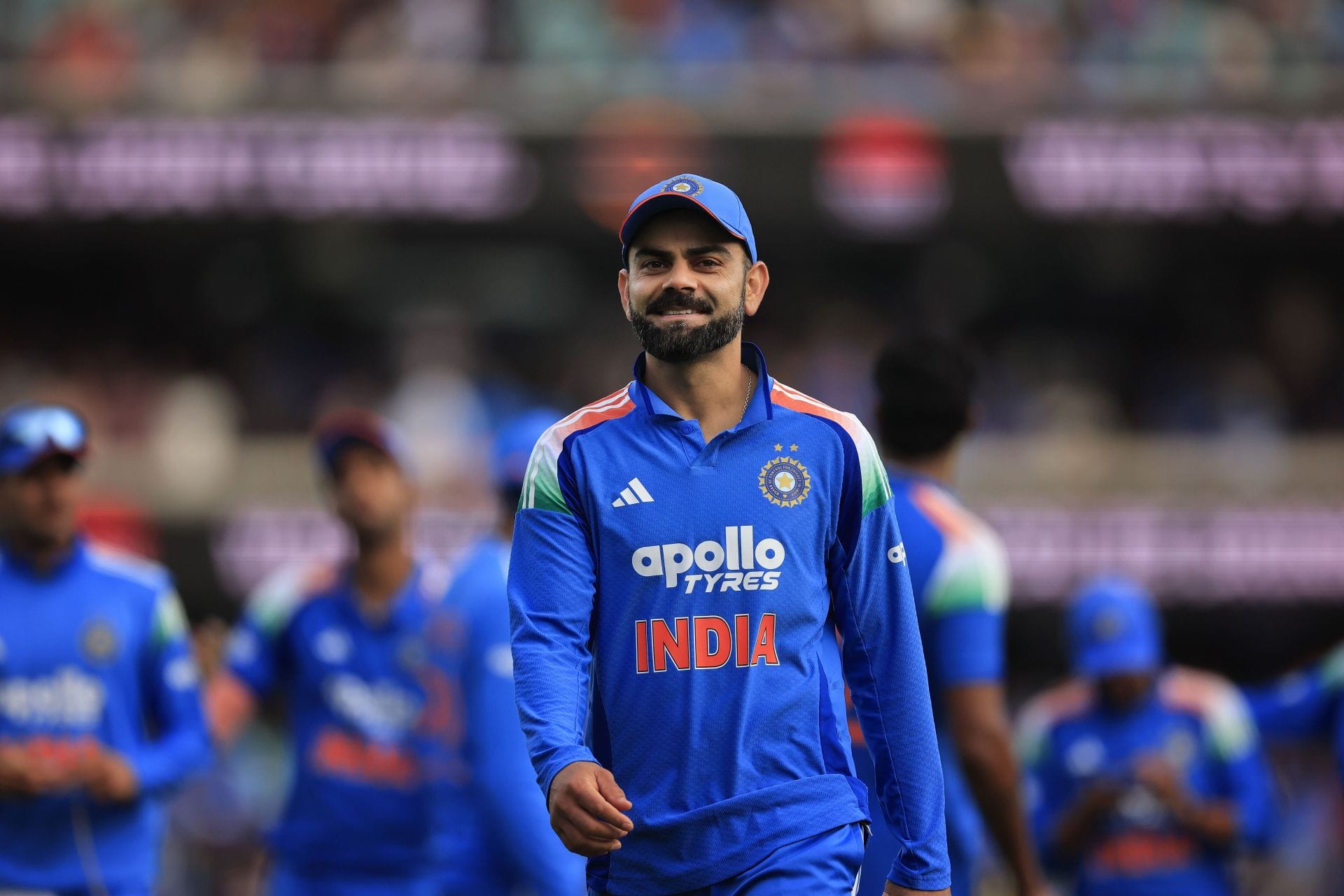
Jakub Mensik: Whenever you are playing in Australia, I always get curious about it. I know how huge cricket is in India, and I’ve seen how passionate the fans are.
If I had to choose one Indian cricketer, I’d say Virat Kohli. I really respect his mentality and his competitiveness. That’s something I can relate to as a tennis player — the way he handles pressure and wants to perform in the biggest moments.
And if I could train with him for a day, I’d choose batting. As a tennis player, I’m already used to hitting a ball, so maybe I have a small advantage! But honestly, I would probably spend more time asking him questions than trying to become a cricketer.
I’d love to experience what it’s like to walk into a stadium in India with tens of thousands of people watching. The passion of Indian sports fans is incredible.
10. How important have your coach, family and the rest of your team been in your development, and is there someone behind the scenes who deserves more credit than people might realise?
Jakub Mensik: You don’t achieve something like this alone. People see the player on the court, but they don’t see the people who are there every day when things aren’t going well.
My family has obviously been extremely important. They supported me before anyone knew who Jakub Mensik was, and that’s something you never forget.
My coaches and the whole team are also a huge part of my development. They don’t just help me with tennis; they help me stay grounded and make good decisions away from the court.
If there is someone who deserves more credit, it’s probably my family. They made a lot of sacrifices for me when I was young, long before there was any guarantee that I would have a professional career.
11. What is the next challenge that genuinely excites you — is there a particular tournament, ranking goal or milestone you’re chasing over the next few years?
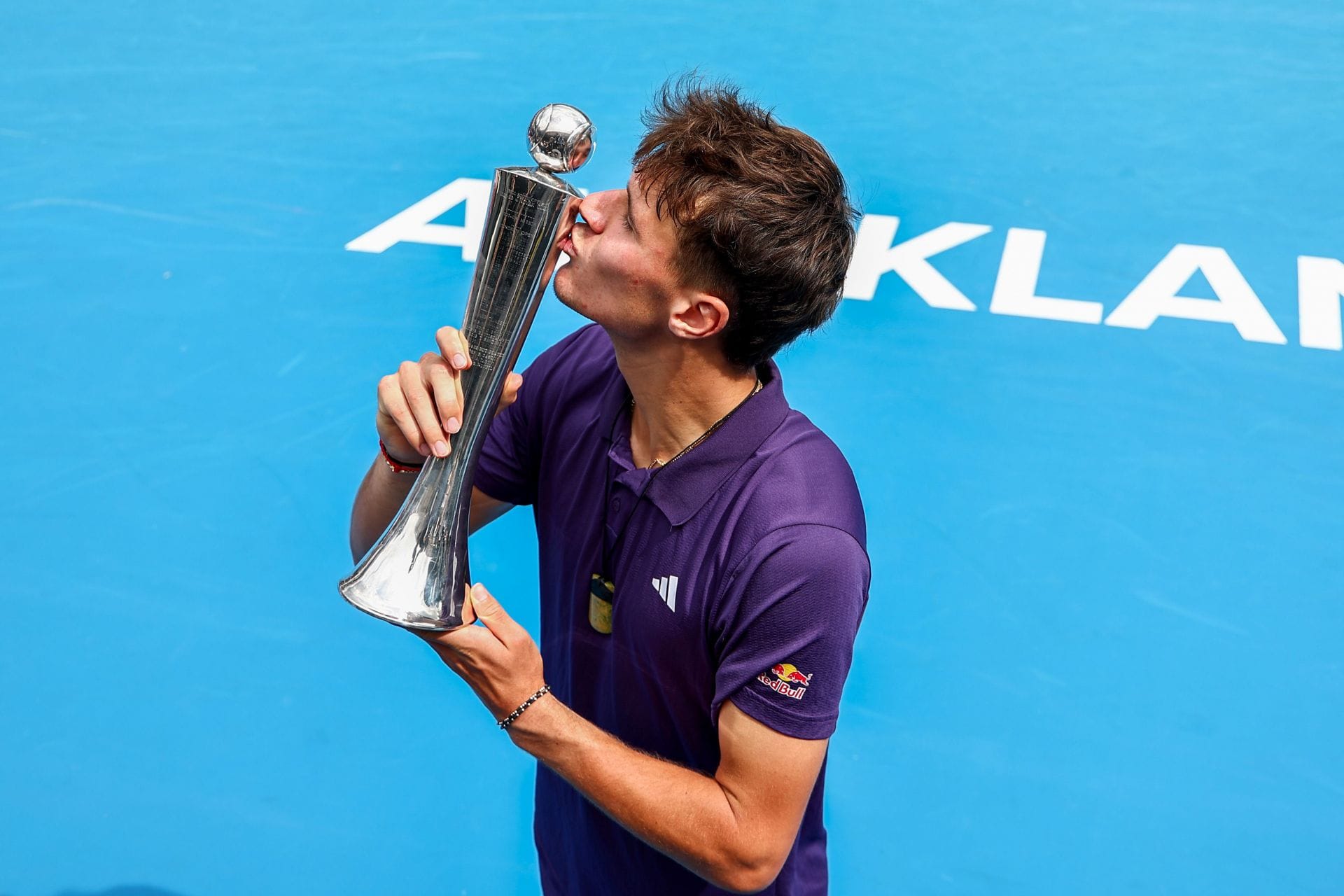
Jakub Mensik: I have goals, but I don’t like putting too many numbers out there publicly because then you can start playing for the ranking instead of playing tennis.
Of course, I want to win Grand Slams. I want to become No. 1 in the world one day. Those are the biggest goals, and I’m not afraid to say that.
But right now, the challenge that excites me most is becoming a more complete player. I want to be the guy who can win on every surface, handle five-set matches, deal with pressure and still play my best tennis when it matters most.
The ranking will take care of itself if I keep improving.
12. Finally, when people look back at Jakub Mensik’s career 10 or 15 years from now, what do you hope they remember about the player and the person you were?
Jakub Mensik: I hope they remember that I always competed.
Obviously, I want people to remember titles and big matches, but tennis is bigger than trophies. I want people to say that I respected my opponents, respected the sport and gave everything I had whenever I walked onto a court.
And as a person, I hope people say I stayed the same Jakub. I don’t want success to change who I am.
If, 15 years from now, a young Czech kid — or a kid anywhere in the world, including India — watches me and thinks, „I want to do that one day,” then that would mean a lot to me.
Because when I was growing up, I had players who made me feel the same way. That’s probably the best legacy you can leave.
Edited by Pritha Ghosh